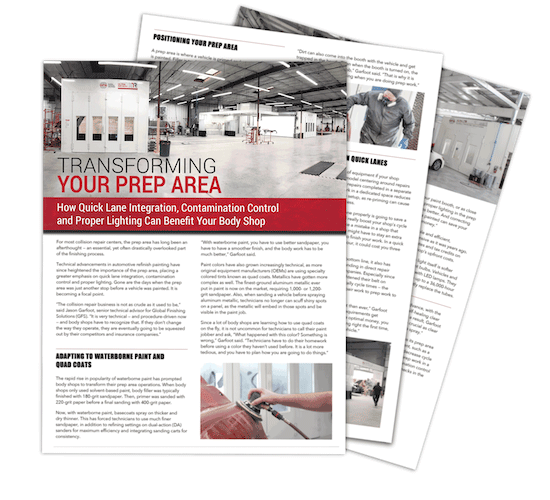
Clearing the Air
5 Things Every Paint Booth Operator Should Know About Filtration
Ask paint booth operators where they lose time and money, and you’ll hear about equipment costs, labor, material prices and rework. Rarely does anyone mention filters. Yet in booth after booth, across automotive refinish shops, industrial coating lines and aerospace finishing operations, filtration is quietly undermining performance in ways that aren’t always traced back to the filter itself.
A clogged or wrong-spec filter doesn’t announce itself. It shows up as a defect on a finished part, a fan that’s working harder than it should, an air quality reading that’s creeping in the wrong direction or a rework rate that never quite improves. Operators invest heavily in quality equipment, premium coatings and skilled technicians, then quietly give ground on all of it because of poor filtration.
The good news is that filtration is also one of the easiest aspects of booth performance to get right. In this FREE guide, discover how the correct filtration strategy can improve efficiency, reduce costs and even prevent serious safety risks, so you stop leaving performance and profit on the table.
In this FREE guide, you will learn:
The distinct filter types in a layered paint booth system, and the role each plays in finish quality, equipment protection and compliance
How clogged filters disrupt airflow and create the predictable defects that drive up rework and reduce throughput across automotive, industrial and aerospace operations
Why filter health is a safety and compliance issue, including why an overloaded exhaust filter is a real fire risk and how compromised airflow puts worker health on the line
The four measurable conditions that should drive your filter change schedule, so you're never reacting to a bad job or a failed inspection after the fact
How filter design and media construction impact total filtration cost, equipment wear and your booth's long-term performance, and why the lowest-cost filter is rarely the most economical
Download your free guide today!
Fill out this form and we’ll send you our “Clearing the Air” free guide
How Often Should You Be Changing Your Filters?
There is no single universal answer, but the right change frequency is not guesswork either. It’s driven by four measurable conditions — differential pressure gauge readings, visual inspection, the type of coating you’re spraying and your production volume in spray hours. High-throughput industrial operations may need filter changes daily or every few shifts. A lower-volume refinish shop might go weeks between exhaust filter changes. The operators who get this right build filter maintenance into their standard operating procedures rather than reacting to a finish defect or a failed air test after the fact.